




 RSS
RSS
|
|
|
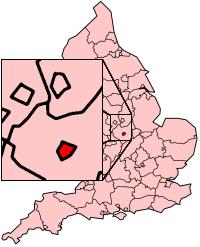
Leicester ( ) is a city and unitary authority in the East Midlands of England, and the county town of Leicestershire. The city lies on the River Soar and at the edge of the National Forest. In 2006, the population of the Leicester unitary authority was estimated at 289,700, the highest in the region, whilst 441,213 people lived in the wider Leicester Urban Area, making Leicester the eleventh most populous settlement in the United Kingdom and the UK's fifteenth largest urban conurbation, the second largest in the East Midlands behind Nottingham. Eurostat's Larger Urban Zone listed the population of the area at 772,400 people as of 2004. Ancient Roman pavements and baths remain in Leicester from its early settlement as Ratae Corieltauvorum, a Roman military outpost in a region inhabited by the Celtic Corieltauvi tribe. Following the demise of Roman society the early medieval Ratae Corieltauvorum is shrouded in obscurity, but when the settlement was captured by the Danes it became one of five fortified towns important to the Danelaw. The name "Leicester" is thought to derive from the words castra of the "Ligore", meaning camp of the dwellers on the (river) Legro. Leicester appears in the Domesday Book as "Ledecestre". Leicester continued to grow throughout the Early Modern period as a market town, although it was the Industrial Revolution that facilitated a process of rapid unplanned urbanisation in the area. A newly constructed rail and canal network routed through the area stimulated industrial growth in the 19th century, and Leicester became a major economic centre with a variety of manufacturers engaged in engineering, shoemaking and hosiery production. The economic success of these industries, and businesses ancillary to them, resulted in significant urban expansion into the surrounding countryside. The boundaries of Leicester were extended several times in the 19th and 20th centuries; it became a county borough in 1889, and was granted city status in 1919. Today, Leicester is located on the Midland Main Line and close to the M1 motorway. The city has a large ethnic minority population, particularly of South Asian origin, a product of immigration to the United Kingdom since the Second World War. To cater for the South Asian community, there are many Hindu, Sikh and Muslim places of worship and the Melton Road district serves as a focus, containing large numbers of Asian restaurants and other small businesses. Leicester is a centre for higher education, with both the University of Leicester and De Montfort University being based in the city. |